
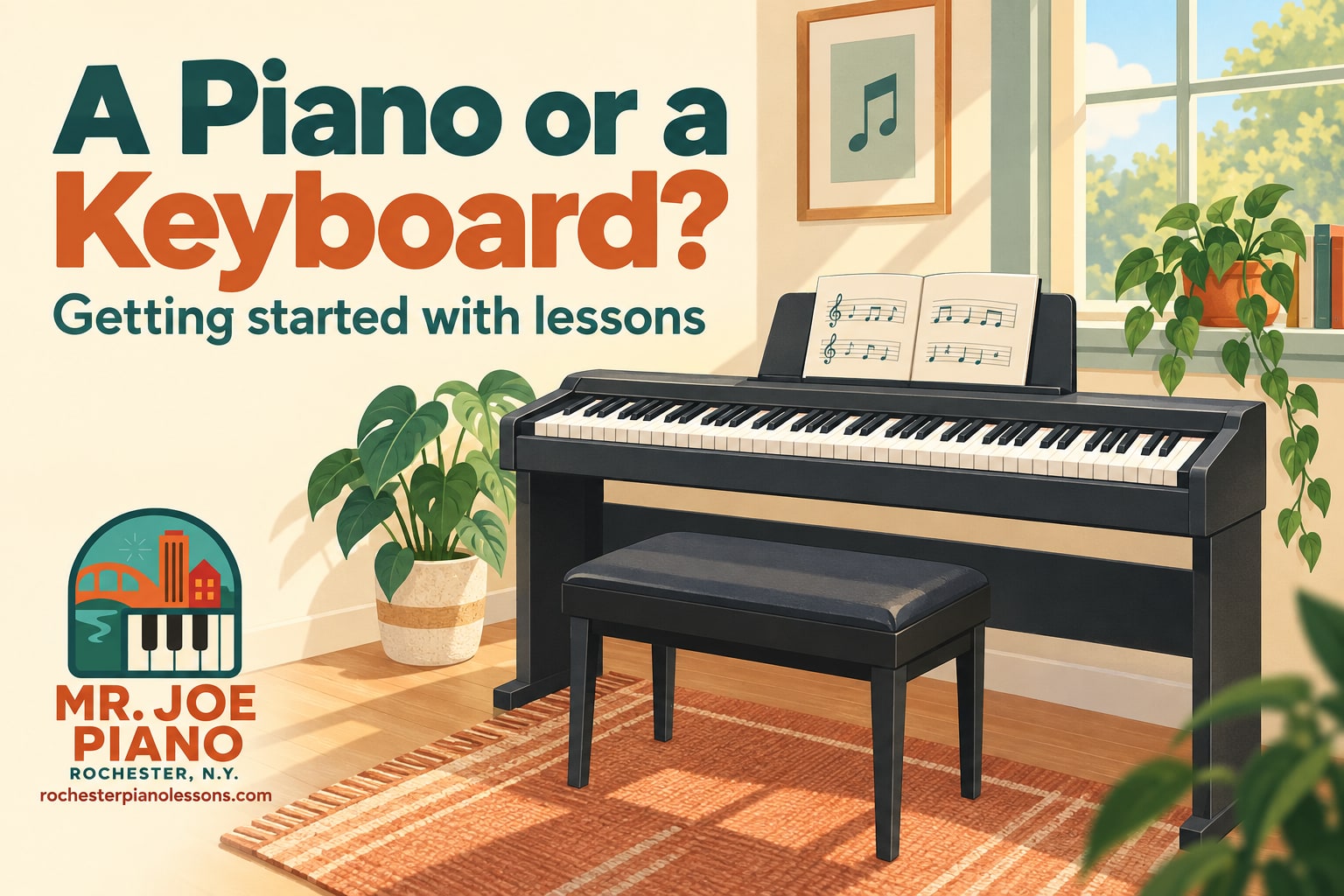
You don't have to buy an acoustic piano to start lessons. A keyboard may be enough to get going, especially for a young child. You'll need something to practice on at home, but before you buy anything, let's talk about what you already have.
Can I start with the keyboard I already have?
For children ages 5–10, I'm comfortable starting with a suitable keyboard that doesn't have weighted keys. They can begin learning where the notes are, working on rhythm, and playing their first songs.
I usually tell parents to plan on upgrading within the first year or so. How soon depends on how fast lessons progress and how serious the student is. If your child is moving along quickly and really getting into piano, we may talk about upgrading sooner.
That means moving to a digital piano with weighted keys or an acoustic piano. We'll talk about the timing during lessons.
Before assuming your keyboard will work, send me the brand and model. A small toy keyboard is different from an instrument we can use for lessons. For an older beginner or an adult, let's discuss the instrument and what you want to learn before deciding what to use.
What should I look for when it's time to upgrade?
Look for a digital piano with 88 full-size, weighted, touch-sensitive keys. That gives you the full piano keyboard and a feel closer to an acoustic piano.
“Weighted” describes the resistance you feel when you press a key. “Touch-sensitive” means the volume responds to how you play: a gentle touch gives you a quieter note, and a stronger touch gives you a louder one. A keyboard can be touch-sensitive without having weighted keys, so check for both.
Think about where you'll put it, too. Make room for a stable stand and a seat at the right height. If you need to practice while someone else is sleeping or working, check the headphone connection.
Do I need an acoustic piano?
No. A suitable digital piano can work well for lessons and practice at home.
If you already have an acoustic piano, let me know what condition it's in and when it was last tuned. If you're thinking about taking home a used one, have a piano technician look at it first. Even a free piano can come with moving costs, tuning, and repairs. Find out what it needs before arranging the move.
Leave it set up so you can practice
If you have room, leave the keyboard out and ready to play. Having to unpack it, find the cord, and clear a table adds a job before practice has even started.
Keep the music and lesson notes nearby, with enough light to read them. Make sure your child can sit comfortably and reach the keys without stretching, with support under their feet if they need it.
Practice MOST days. Work on what we covered in the lesson, and ask if you're unsure what to do at home. I've written more about how much children should practice here.
Let’s talk before you buy
I teach children and adults in their homes around Rochester. If you're thinking about lessons, tell me who's starting, where you're located, and what instrument you have. If you don't have one yet, that's something we can talk through.
Ask about a free meet-and-greet. Bring your questions about lessons and the instrument. You don't have to make the purchase first.