
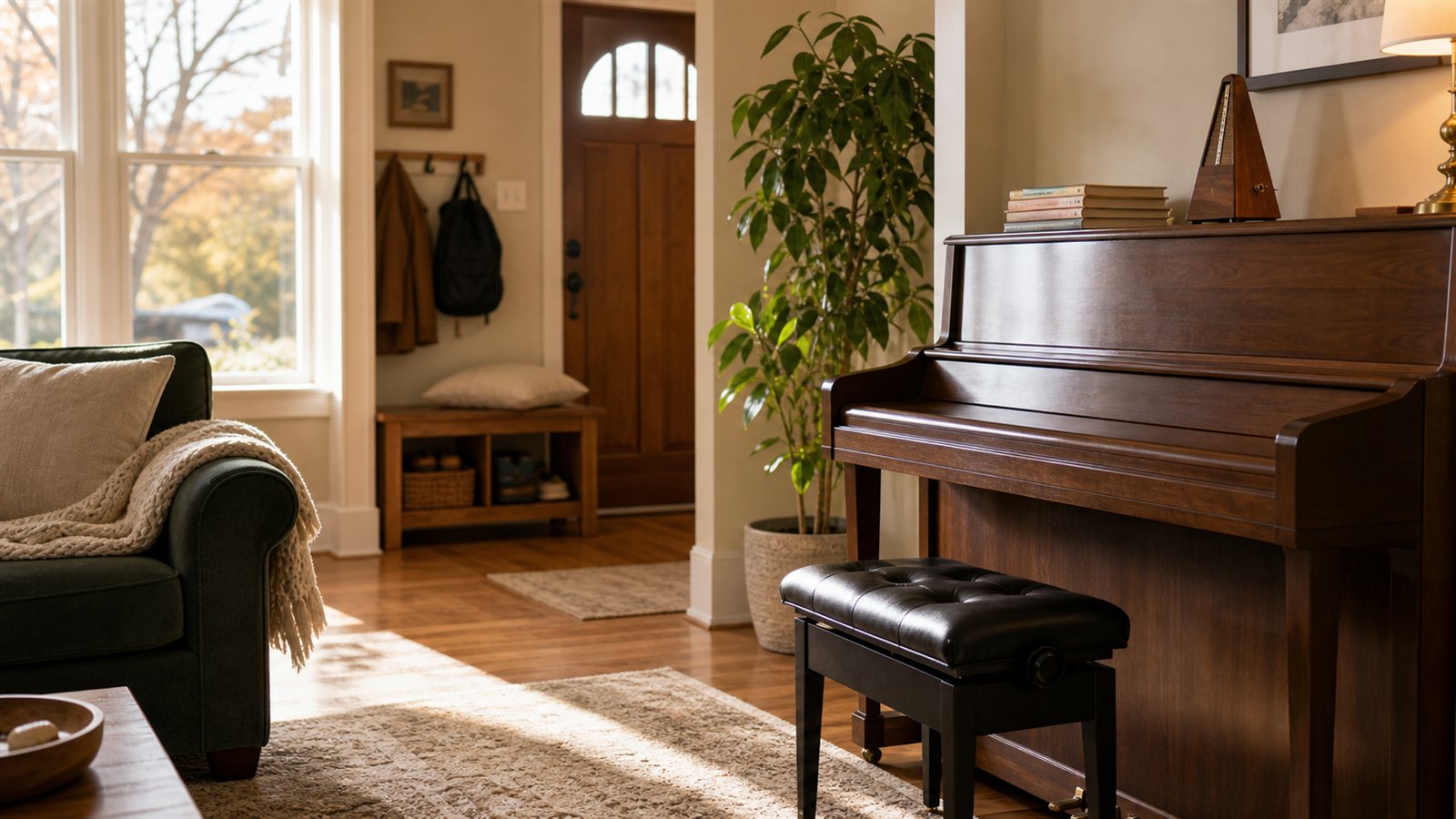
When families ask about in-home piano lessons in Rochester, one of the first questions is usually simple: what do we need to have ready?
The good news is that you do not need a picture-perfect music room or a house full of expensive equipment. You need a dependable instrument, a comfortable place to sit, and a routine that gives the student a real chance to practice between lessons.
Here are a few practical ways to get your home ready before piano lessons begin.
Start With an Instrument the Student Can Practice On
Every piano student needs something to play between lessons. An acoustic piano is wonderful, but it is not the only option. A good digital piano can work very well for beginner piano lessons, especially when it has full-size keys and a realistic feel.
Small toy keyboards can be fun, but they quickly become frustrating when a student is trying to learn hand position, rhythm, and basic technique. A keyboard with fewer keys may be okay for a short time, but it is worth planning for an instrument that will not hold the student back as they grow.
Before spending money, ask. It is much easier to talk through what you already have than to replace something that was not a good fit. This is one advantage of piano lessons at home: I can see the setup the student will actually use all week.
Make the Bench Comfortable and Stable
A bench may seem like a small detail, but it matters. Students should be able to sit at a comfortable height, reach the keys without stretching, and keep both feet supported. A real piano bench or an adjustable bench is ideal.
A dining chair can work in a pinch, but it often puts a child too low, too high, or too far away from the keyboard. Good posture is not about making kids sit stiffly. It is about helping their hands, arms, and shoulders move naturally while they play.
Choose a Spot That Is Easy to Reach
The best piano location is usually not hidden away in a room nobody uses. A visible, comfortable spot makes it easier for a student to sit down for a few minutes after school, before dinner, or whenever the routine works for your family.
That does not mean the piano needs to be in the middle of a busy hallway. It just needs enough quiet to hear the lesson and enough space for the student, teacher, bench, music, and an adult nearby when needed.
For students under 18, a parent or responsible adult needs to be home during the lesson. The adult does not need to sit beside the piano the whole time, but someone should be present in the home.
Keep the Lesson Materials in One Place
A simple basket, folder, or spot on a nearby shelf can make the weekly routine easier. Keep lesson books, loose music, pencils, and any practice notes together so they are not getting lost between lessons.
When a student has to search the whole house for a book, practice feels like a bigger task before they even play one note. A simple setup removes that friction.
Build a Small, Realistic Practice Routine
For beginners, practice does not need to mean an hour at the piano. In fact, short and consistent is usually much better than a long session once a week.
For a young beginner, five to ten focused minutes most days can be a great place to start. Older beginners may be ready for a little more. The goal is to make piano a normal part of the week, not a daily battle.
Our guide on how much children should practice piano offers a few realistic starting points by age and level. If you are not sure whether your child is ready to begin at all, see what age kids should start piano lessons.
Parents Do Not Need to Be Piano Teachers
Parents sometimes worry that they need to read music or understand every assignment. You do not. Your job is not to become a second teacher.
The most helpful thing is usually a simple reminder and a calm routine: make sure the student has time to sit down, encourage effort, and avoid turning every mistake into a correction. The lesson will provide the musical direction. Consistency at home helps it stick.
Keep the First Lesson Low-Pressure
New students do not need to impress anyone on day one. A free meet-and-greet lesson is a chance to talk about the student’s age, experience, goals, schedule, and home setup. For younger students, it also gives me a chance to see how they respond to the piano and a little basic instruction.
Some kids jump right in. Others are quiet at first. Both are normal. The point is to start in a way that feels comfortable and gives everyone a clear idea of whether private lessons are a good fit.
A Good Home Setup Makes Consistency Easier
There is no magic formula, but a usable instrument, a steady bench, organized materials, and a short practice routine give students a strong start.
For Rochester families, that is the real benefit of learning at home. There is no extra drive across town, and the student learns on the same instrument they will use during the week. It can make piano lessons easier to keep going when life gets busy.
For more about how in-home lessons work, read our Rochester parent guide to in-home piano lessons. Adults who are thinking about starting can also read why it is never too late to start piano.